The Father imposed His wrath due unto, and the Son underwent punishment for, either:
- All the sins of all men.
- All the sins of some men, or
- Some of the sins of all men.
In which case it may be said:
- That if the last be true, all men have some sins to answer for, and so, none are saved.
- That if the second be true, then Christ, in their stead suffered for all the sins of all the elect in the whole world, and this is the truth.
- But if the first be the case, why are not all men free from the punishment due unto their sins?
If you answer, “Because of unbelief.”
I ask, Is this unbelief a sin, or is it not? If it be, then Christ suffered the punishment due unto it, or He did not. If He did, why must that hinder them more than their other sins for which He died? If He did not, He did not die for all their sins!”
John Owens
_____________________________________________
The Atonement of Christ is a topic that draws a lot of heat and divides quickly. I feel that John Owen laid out very well the three beliefs of the Atonement, and also explains the complications that always follow two of these views. What I write here will never compare to the mind of John Owen but I will attempt to add my thoughts and hope I don’t confuse you.
Taking a look at the first view we run into immediate problems. If you hold to the belief that Christ paid for all sins of all men then you must be a Universalist. This is the belief that all will be saved. We know that not all will be saved because scripture is clear on this in many passages such as 1 Corinthians 6:9 “Or do you not know that the unrighteous will not inherit the kingdom of God? Do not be deceived: neither the sexually immoral, nor idolaters, nor adulterers, nor men who practice homosexuality, nor thieves, nor the greedy, nor drunkards, nor revilers, nor swindlers will inherit the kingdom of God.” By Atonement for all the sins of all people this would leave all mankind free of all guilt and punishment, but we know those found outside of Christ will endure eternal punishment. If you still hold to Christ Atoned for all, but men can still go the hell for unbelief, then either unbelief isn’t a sin or Christ didn’t make a full atonement. Major problems…
I will skip number two for now and go to the third option.
The third belief is that Christs Atonement paid the price and appeased the wrath of God for some of the sins of all men. Again this brings an immediate problem because we can see an unpaid price for the sins that the Atonement didn’t cover. Man still isn’t saved since he is still guilty in the sight of God, and God is unjust. Man isn’t saved because he must appease some of God’s wrath for some of his sin, and God is unjust because He demands a double payment from two people for one persons sin. With this belief also one must say that the Atonement was not sufficient or efficient but the Bible says otherwise.
1 John 1:7 “But if we walk in the light, as he is in the light, we have fellowship with one another, and the blood of Jesus his Son cleanses us from all sin”
1Pet 2:24 “He himself bore our sins in his body on the tree”
Isaiah53:5 “But he was pierced for our transgressions; he was crushed for our iniquities; upon him was the chastisement that brought us peace, and with his wounds we are healed.”
The second view of the Atonement, the view that I hold, is the belief that Jesus died for a particular people. He stood in their place and paid for all of their sin. This isn’t a nameless and faceless group of people, it was His people. He knew them by name and they were ordained from eternity for salvation. The Atonement was sufficient and could pay for the whole world but it was only efficient for His sheep. The overwhelming majority of scripture points to God the Father choosing His people, God the Son redeems those chosen and God the Holy Spirit seals the redeemed. There was, from before time, a definite number of people, not one more and not one less, that would have the works of Christ applied to them in a salvific way.
- Matt. 1:21 “And she will bring forth a Son, and you shall call His name Jesus, for He will save His people from their sins.”
- Matt. 20:28 “… just as the Son of Man did not come to be served, but to serve, and to give His life a ransom for many.”
- Matt. 26:28 “For this is My blood of the new covenant, which is shed for many for the remission of sins.”
- John 10:11, 15 “I am the good shepherd. The good shepherd gives His life for the sheep. As the Father knows Me, even so I know the Father; and I lay down My life for the sheep.”
- Acts 13:48 “Now when the Gentiles heard this, they were glad and glorified the word of the Lord. And as many as had been appointed to eternal life believed.”
- Acts 20:28 “Therefore take heed to yourselves and to all the flock, among which the Holy Spirit has made you overseers, to shepherd the church of God which He purchased with His own blood.”
- Rom. 8:32-34 “He who did not spare His own Son, but delivered Him up for us all, how shall He not with Him also freely give us all things? Who shall bring a charge against God’s elect? It is God who justifies. Who is he who condemns? It is Christ who died, and furthermore is also risen, who is even at the right hand of God, who also makes intercession for us.”
- Eph. 5:25-27 “Husbands, love your wives, just as Christ also loved the church and gave Himself for it, that He might sanctify and cleanse it with the washing of water by the word, that He might present it to Himself a glorious church, not having spot or wrinkle or any such thing, but that it should be holy and without blemish.”
- Heb. 2:17 “Therefore, in all things He had to be made like His brethren, that He might be a merciful and faithful High Priest in things pertaining to God, to make propitiation for the sins of the people.”
- Heb. 9:15, 28 “And for this reason He is the Mediator of the new covenant, by means of death, for the redemption of the transgressions under the first covenant, that those who are called may receive the promise of the eternal inheritance. So Christ was offered once to bear the sins of many. To those who eagerly wait for Him He will appear a second time, apart from sin, for salvation.”
- Rev. 5:9 “And they sang a new song, saying: You are worthy to take the scroll, and to open its seals; for You were slain, and have redeemed us to God by Your blood out of every tribe and tongue and people and nation.”
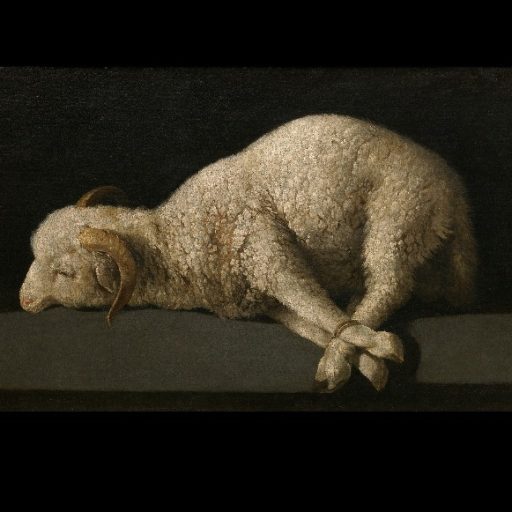
In Matthew 25 we see two types of people mentioned by Jesus, the sheep and the goats. These two types of people never change, the sheep have always and will always be sheep, and the goats have always and will always be goats. The one never changes into the other. In Matt 25 we read “He will separate them one from another, as a shepherd divides his sheep from the goats. And He will set the sheep on His right hand, but the goats on the left”.
These sheep are the ones Christ laid down His life for. The Atonement was effectively applied to all the sheep and none will be lost and none will have payment demanded from them.
Take the time necessary to fully inspect your belief on this topic. Weigh each option in light of scripture as a whole, not just one verse as a proof text. This is an important thing to understand so with much prayer ask yourself:
Did Jesus die for me?
Did Jesus go to the cross knowing my name?
Did Jesus stand in my place and pay what I couldn’t?
Did Jesus actually accomplish what He came to do?
 No King but Christ